Posts

Showing posts with the label Chemical Industry

What is Chitin and Functions of Chitin?

Image
  Chitin Market Chitin is a structural polysaccharide made up of modified glucose chains. Insect exoskeletons, fungus cell walls, and certain hard structures in invertebrates and fish all include chitin. Chitin is only second to cellulose in terms of abundance. Each year, organisms create over 1 billion tonnes of chitin throughout the biosphere. This incredibly adaptable molecule may create solid structures on its own, as in insect wings, or combine with additional components, such as calcium carbonate, to build even stronger materials, such as clam shells. According to Coherent Market Insights the Chitin Market Global Industry Insights, Trends, Outlook, and Opportunity Analysis, 2018-2026 Chitin, like cellulose, is not digestible by vertebrate animals on their own. Symbiotic bacteria and protozoa can break down the fibrous chitin into the glucose molecules that make it up in animals that eat insects. Chitin, on the other hand, is a biodegradable molecule that degrades over t...

As dyes and pigments both impart colors to materials, both differ in terms of their applications as well as the way they work

Image
  Dyes and Pigments Market Dyes and pigments are mostly used to add colour to materials, whether they be textiles or paintings. While dyes are soluble in water, pigments must first be ground into a coarse powder, then combined with a dispersing agent before being applied. The nature of dyes and pigments differs, resulting in dramatically various applications. On the one hand, dyes are mostly employed in the textile and paper industries, whereas pigments are used in industries such as colourants, inks, cosmetics, and plastics. According Coherent Market Insights the Dyes and Pigments Market Global Industry Insights, Trends, Outlook, and Opportunity Analysis, 2018-2026. While both dyes and pigments are used to colour materials, they are very different in terms of the materials they may be used on and how they work. Depending on the chemical composition of the dye and the object to be coloured, dyes can be employed directly or as a dye solution (dyes dissolved in water). Finding ...

Side effects of Carboxymethyl cellulose and Precautions while taking Carboxymethyl cellulose

Image
  Carboxymethyle Cellulose Market Carboxymethyl cellulose, popularly known as fake tears, is an eye lubricant. It functions in the same way that natural tears do, providing temporary relief from burning and discomfort caused by dry eyes by maintaining sufficient lubrication and acting as a barrier against future irritation. According to Coherent Market Insights the carboxymethyl cellulose market is estimated to surpass US$ 1,342.9 million by 2027, exhibiting a CAGR of 3.2% between 2020 and 2027.   Side effects of Carboxymethyl cellulose? Rashes, hives, itching, red, swollen, blistered, or peeling skin with or without fever; wheezing; tightness in the chest or throat; difficulty breathing, swallowing, or talking; unusual hoarseness; or swelling of the mouth, face, lips, tongue, or throat are all symptoms of an allergic response. Changes in vision, eye pain, or severe eye irritation are all possible symptoms. Side effects are possible with any medicine. Many other...

What is Propylene oxide? What are the uses of it?

Image
  Propylene Oxide Market Polyethers (the major component of polyurethane foams) and propylene glycol are both made with propylene oxide. Propylene oxide has caused eye and respiratory tract irritation in humans and animals after acute (short-term) exposure. Even with weak concentrations, dermal contact has produced skin irritation and necrosis in people. In humans, propylene oxide is a mild central nervous system (CNS) depressant. In animals chronically (long-term) exposed to propylene oxide by inhalation, inflammatory lesions of the nasal cavity, trachea, and lungs, as well as neurological consequences, have been seen. In mice, propylene oxide has been shown to generate tumours at or around the site of administration, with forestomach tumours following gavage (experimentally placing the chemical in the stomach) and nasal tumours following inhaling exposure. Propylene oxide is designated as a Group B2 probable human carcinogen by the EPA. According to Coherent Market Insights th...

Things to know about trash bags

Image
  Trash Bags Market Even the most adamant opponents of plastic pollution find it difficult to give up garbage bags. It's just odd to have a garbage can that isn't covered. You might be concerned about messes or having things fall apart. To minimise stray debris from flying out of trash cans and washing into rivers, towns frequently encourage or even require the use of trash bags. No, in an ideal world, but it all relies on your circumstances. You should theoretically produce no waste if you compost food, give unwanted stuff, and refuse nonrecyclables. In fact, Bea Johnson discusses how "I'm sorry, but I don't have a trash can" is one of her go-to rejection methods in her zero waste book. However, let's face it: this can range from exceedingly tough to impossible. The majority of us still generate some waste. Even if you just produce a tiny quantity of dry garbage, you may want to keep it together to reduce the chance of it blowing away on a windy day, so k...

Things to know about Dyes and Pigments

Image
  Dyes and Pigments Market Dyes and Pigments is a book about the chemistry and physics of dyes, pigments, and their intermediates from a scientific and technological standpoint. The features of the colouring materials are emphasised rather than their applications or the systems in which they can be used. Thus, the journal accepts research and review papers on the synthesis of dyes, pigments, and intermediates, as well as their physical or chemical properties, such as spectroscopic, surface, solution, or solid state characteristics, physical aspects of their preparation, such as precipitation, nucleation, and growth, crystal formation, liquid crystalline characteristics, photochemical, ecological, or biological properties, and the relationship between colour and chemical constitution. However, papers dealing with the more fundamental elements of colourant application and colourant interactions with substrates or media are being evaluated. According to Coherent Market Insights the...

Brief about Chitin and Function of Chitin

Image
  Chitin Market Chitin Definition Chitin is a structural polysaccharide made up of modified glucose chains. Insect exoskeletons, fungus cell walls, and certain hard structures in invertebrates and fish all include chitin. Chitin is only second to cellulose in terms of abundance. Each year, organisms create over 1 billion tonnes of chitin throughout the biosphere. This incredibly adaptable molecule may create solid structures on its own, as in insect wings, or combine with additional components, such as calcium carbonate, to build even stronger materials, such as clam shells. Chitin, like cellulose, is not digestible by vertebrate animals on their own. Symbiotic bacteria and protozoa are typically found in animals that consume insects and can break down the fibrous chitin into the glucose molecules that make it up. Chitin, on the other hand, is a biodegradable molecule that degrades over time and is utilised in a variety of industrial applications, including surgical thread and ...

What is PVD Technology? PVD Advantages and its Application

Image
  Physical Vapor Deposition Market What is PVD Technology? PVD is a thin film preparation technique in which the surface of a material source (solid or liquid) is physically vaporised into gaseous atoms, molecules, or partially ionised into ions under vacuum conditions. Then, using a low-pressure gas, a film with a specific function is deposited on the substrate's surface (or plasma). Vacuum evaporation, sputtering deposition, arc plasma plating, ion plating, and other processes of physical vapour deposition are the most common. PVD film offers a quick deposition speed, high adhesion, good diffraction, and a wide range of applications. According to Coherent Market Insights the Physical Vapor Deposition Market Size, Share, Outlook, and Opportunity Analysis, 2019 - 2027 PVD Advantages 1. Sturdy construction. PVD coatings are sometimes harder and more corrosion resistant than conventional coatings, such as electroplating. 2. Broad Applicability. Almost all inorganic and or...

What are the Staple Fibers and purpose of staple fibers?

Image
  Staple Fibers Market Staple fibres are natural fibres originating from plants or animals that may be twisted to form yarn, such as raw cotton, wool, hemp, and flex. Because silk is a filament yarn, it is an exception to the rule for staple fibres. To develop strength, filaments are heated, cooled, and crimped from various sources. Fibers are cut into 12 to 18 inch long fibres, which are packed and processed into yarn, depending on the necessity. Opening, bending, carding, drafting, roving, spinning, and winding are all part of the spinning process for these fibres. Bending, carding, and drafting are all important procedures. According to Coherent Market Insights the Staple Fibers Market Global Industry Insights, Trends, Size, Share, Outlook, and Opportunity Analysis, 2018-2026 Staple fibres are strong mechanically and can be reprocessed readily. For all filling actions, they provide great robustness. The next generation, thermal-bonded high loft nonwovens mattress, which i...

Acrylic sealants are water-based and highly flexible solution for construction industry

Image
Acrylic sealants are used in construction to create waterproofing on terraces and other hard surfaces. Generally, they are water-based and flexible and can be applied by hand. Some types are packaged in syringes, tubes, and cartridges for easy application. Pneumatic sprayers or semi-automatic equipment are best for the application process. The global acrylic sealants market size is likely to witness potential gains in the near future, and grow at a CAGR of 6.3% over the forecast period (2019 - 2027). Acrylic Sealants Market Various types of acrylic sealants are available in the market. Water-based sealant is widely used for interior decoration, general construction expansion joints, and joint filling. It is also used for non-long-term immersion environments. This type of sealant is also excellent for filling gaps between indoor walls. Its superior adhesion to different building materials makes it the most appropriate material for such applications. Adaptation workshops: For car ad...

Monoisopropanolamine; Used In Several Applications to Attain Basicity, Buffering, and Alkalinity Objectives

Image
Monoisopropanolamine (MIPA), also known as isopropanolamine, is a chemical used in many applications serving as a stabilizer, an emulsifier, a neutralizer, and chemical intermediate that achieves buffering, basicity, and alkalinity objectives. MIPA is a colorless, clear liquid that is completely miscible with water, benzene, and alcohol. MIPA has the lowest molecular weight of the three standard isopropanolamines. Monoisopropanolamine is an organic compound that is used as a reactive agent, pH regulator, and acidic herbicide neutralizer. The global monoisopropanolamine market size is expected to witness potential gains in the future and register a significant CAGR of 4.2% over the forecast period (2019 - 2027). Monoisopropanolamine Market Monoisopropanolamine-based formulations exhibit better color stability, thermal stability, and better oil solubility compared to conventional ethanolamines. MIPA serves as good solubilizer of oil and fat, entails lower formulation costs, and off...

Inorganic Acids Market Overview, Dynamics and Outlook

Image
Inorganic acids can be made from either inorganic or mineral substances. Sulfuric acid, hydrochloric acid, perchloric acid, nitric acid, boric acid, hydrofluoric acid, and phosphoric acid are examples of inorganic acids. Inorganic acids come in a variety of strengths. Inorganic acids have the property of being freely soluble in water but insoluble in organic substances or solvents. Inorganic acids are commonly utilised as raw materials in the manufacturing of many organic and inorganic chemicals.   Market Dynamics Metal refining, fertilisers, food and drinks, personal care (soaps and detergents, toothpaste), chemicals, and medicine are all businesses that use inorganic acids. HNO3 is used as an oxidant to make nylon and adipic acid, as well as as a rocket propellant. As a result, considerable growth in end-use industries is likely to lead to increased demand for inorganic acids, propelling the worldwide inorganic acids market forward throughout the forecast period.   ...

Essential Oil Is Popularly Used In Aromatherapy And Even As A Solution For All Type Of Ailments As It Contains Volatile Chemical Compounds A Plant

Image
Essential oils have a reputation as a "catch-all" solution for all sorts of ailments. An Essential Oil is a concentrated hydrophobic liquid comprising the volatile chemical compounds of a plant. They are also termed as aetheroleum, ethereal oils, or oil of plants. They are known to have numerous therapeutic uses. These aromatic liquids are very useful for aromatherapy, and there are several types of oils, including those with a floral or medicinal scent. Not all essential oils are created equal. While some are mass-produced, most are synthetic or less potent. Essential oil should be authentic in order to get the highest quality.   According to the " Coherent Market Insights " Global Industry Insights, Trends, Outlook, and Opportunity Analysis of Essential Oil Market . Essential Oil Market The scent of essential oils may be influenced by a person's personal preferences. Most aromas blend well with each other, but there are some exceptions. For example, some p...

What is Mechanism behind Guar Gum? Possibly Effective for and side effects of Guar gum?

Image
Constipation, diarrhoea, irritable bowel syndrome (IBS), high cholesterol, and high blood pressure are all treated with guar gum. There isn't much scientific evidence to back up the usage of guar gum for other ailments. According to the " Coherent Market Insights " Global Industry Insights, Trends, Outlook, and Opportunity Analysis of Guar Gum Market .   Guar Gum Market What is the mechanism behind it? Guar gum is a fibre that helps to regulate the moisture content of the stool by absorbing excess liquid in diarrhoea and softening it in constipation. It may also aid in the reduction of cholesterol and glucose absorption in the stomach and intestines. Because guar gum expands in the colon, it causes a feeling of fullness, there is some interest in utilising it for weight loss. This could make you feel hungrier.   Possibly Effective for Constipation. Constipation appears to be relieved by taking guar gum by mouth in some adults and children. Diarrhea. Guar...

What is Chitin? Is Chitin a Protein? Eating chitin - good idea?

Image
Chitin is the second most abundant organic chemical in nature, and it naturally appears as a fiber-forming polymer in many lower eukaryotes, similar to how cellulose protects plants. It's an unbranched long-chain polysaccharide made up of N-acetylglucosamine residues linked by 1,4 covalent bonds. Chitin is found in a variety of biological structures, including insect peritrophic matrix, fungal cell walls, crustacean cuticles, protozoan cyst walls, and nematode eggshells. Chitin derivatives, such as chitooligosaccharides, have a wide range of biotechnological applications due to their diverse properties. Chitin derivatives are also widely employed in biomedicine, pharmaceutical and food technologies, and agricultural biosciences. According to the " Coherent Market Insights " Global Industry Insights, Trends, Outlook, and Opportunity Analysis of Chitin Market . Chitin Market Chitin is a biopolymer (a polymer made by an organism) that occurs naturally. Chitin is the seco...

Medical Management Guidelines for Crotonaldehyde and health effects

Image
Crotonaldehyde is a transparent, colourless to pale yellow liquid with a pungent odour. 2-Butenal and 3-Methylacrolein are two other names for it. It is exceedingly combustible at room temperature and emits poisonous fumes. Crotonaldehyde can be found in minute levels in numerous foods, as well as in the emissions of particular flora and volcanoes. Crotonaldehyde is commercially generated through aldol condensation of acetaldehyde. It has a low water solubility. However, it dissolves readily in organic solvents such as alcohols and ether. Crotonic acid and sorbic acid are largely made from crotonaldehyde through oxidation. According to the " Coherent Market Insights " Global Industry Insights, Trends, Outlook, and Opportunity Analysis of Crotonaldehyde Market . Crotonaldehyde Market People who are simply exposed to crotonaldehyde vapour do not represent a risk of subsequent contamination. People with liquid crotonaldehyde on their clothing or skin can inadvertently cont...

What is Physical Vapour deposition? How Does Physical Vapour Deposition Work?

Image
Physical vapour deposition (PVD) is fundamentally a vaporisation coating technique, involving transfer of material on an atomic level. It is an alternative process to electroplating The process is similar to chemical vapour deposition (CVD) except that the raw materials/precursors, i.e. the material that is going to be deposited starts out in solid form, whereas in CVD, the precursors are introduced to the reaction chamber in the gaseous state. It incorporates processes such as sputter coating and pulsed laser deposition (PLD). According to the " Coherent Market Insights " Global Industry Insights, Trends, Outlook, and Opportunity Analysis of Physical Vapor Deposition Market . Physical Vapour Deposition Market How Does Physical Vapour Deposition Work? PVD processes are carried out under vacuum conditions. The process involved four steps: Evaporation During this stage, a target, consisting of the material to be deposited is bombarded by a high ebergy source suchg as ...

What is extracorporeal shock wave lithotripsy? What are the benefits and drawbacks of this treatment? Is this a therapeutic option for all kidney stone patients?

Image
Extracorporeal shock wave lithotripsy is a non-surgical approach for treating stones in the kidney and ureter. Instead, high-energy shock waves are sent through the body and used to shatter stones into sand-sized fragments. These fragments, due to their small size, can travel through the body with the urine. Shock wave treatment can be used in two methods to remove stones. The patient is placed in a tub of lukewarm water in one way. The body is positioned such that the stones are accurately targeted using x-rays or ultrasound to detect the location of the stones. According to the " Coherent Market Insights " Global Industry Insights, Trends, Outlook, and Opportunity Analysis of Extracorporeal Shock Wave Lithotripsy Market .   Extracorporeal Shock Wave Lithotripsy Market What are the benefits and drawbacks of this treatment? The primary benefit of this treatment is that it allows many individuals to be treated for kidney stones without having to undergo surgery. Comp...

What is ion exchange resin and how does it work?

Image
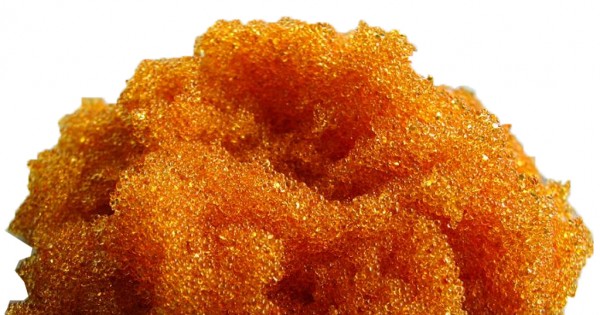
For many years, ion exchange (IX) resin technology has been widely employed as a practical and effective method of water treatment. IX is frequently employed in the water softening industry, which is its primary application. IX resins, on the other hand, offer a wide range of uses. Drinking water quality restrictions have been implemented for contaminants such as disinfection byproducts, arsenic, nitrate, perchlorate, and uranium. These issues are addressed by specialised IX resins. According to the " Coherent Market Insights " Global Industry Insights, Trends, Outlook, and Opportunity Analysis of Ion Exchange Resins Market . Ion Exchange resin Market The IX method uses a reversible ionic interchange between a solid phase (resin beads) and a liquid phase to remove soluble ionised pollutants like hardness and alkalinity from water (water). The two primary types of IX resins are cation and anion. Strong and weak cation (H+ and Na+) resins are included in Cation IX resins. S...

Brief about Potassium Sulphate and Agricultural use of it

Image
Potassium fertiliser is widely used to boost the yield and quality of plants that are growing in soils that are deficient in this vital component. The majority of fertiliser K comes from ancient salt deposits all around the world. The phrase "potash" refers to all potassium-containing fertilisers, including potassium sulphate, and is most commonly used to refer to potassium chloride. Potassium is a reasonably abundant element in the Earth's crust, and every inhabited continent produces potash fertiliser. In nature, however, K2SO4 is rarely found in its pure form. Instead, it's naturally combined with magnesium, sodium, and chloride salts. Separating the components of these minerals necessitates extra processing. K2SO4 was formerly produced by reacting KCl with sulfuric acid. Researchers eventually discovered that they could use a variety of earth minerals to make K2SO4, which is now the most prevalent technique of manufacture. Natural K-containing minerals (such as ...